
Blog
Next.js vs. WordPress in 2026: Why High-Growth Global Brands Are Switching Stack
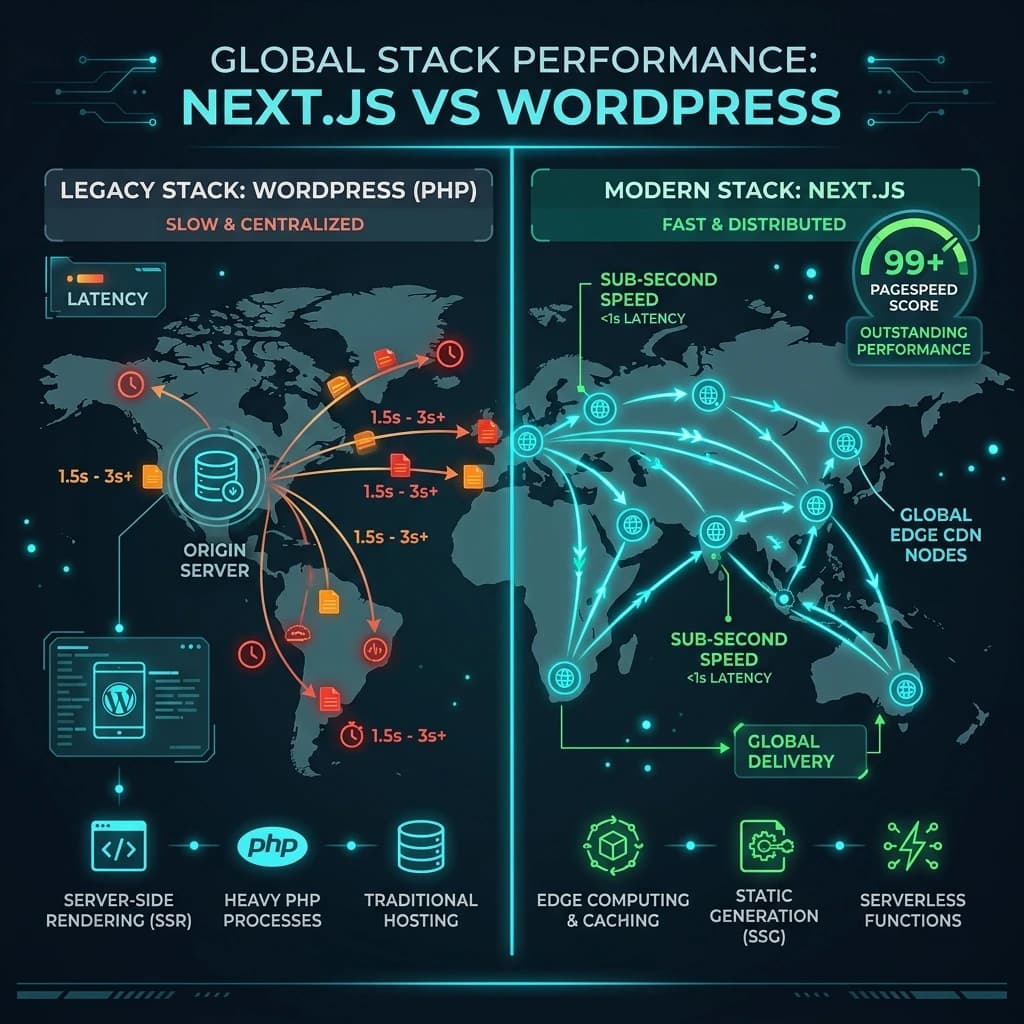
In 2026, web performance is no longer a technical metric — it is your most aggressive sales driver. Google's Core Web Vitals directly dictate search rankings, and study after study confirms that every 100ms delay in page load time reduces conversion rates by up to 7%.
For high-growth businesses competing globally across North America, Europe, Australia, and Asia, the choice of web stack determines whether your marketing spend converts or burns. Here is why modern global brands are migrating from legacy CMS setups to Next.js and React.
The Problem with Legacy CMS & Plugin Bloat
WordPress still powers a significant portion of the web, but it was architected over two decades ago as a PHP blogging engine. As businesses add page builders, form plugins, tracking scripts, and security add-ons, three fundamental bottlenecks emerge:
- Server Rendering Overhead: Every page request queries a MySQL database, processing dozens of PHP files before sending a single byte to the visitor's browser.
- Plugin Vulnerability Risk: Over 90% of WordPress security breaches originate from third-party plugins. Constant plugin updates create maintenance anxiety and breaking changes.
- Slow Global CDNs: Serving dynamic PHP pages to visitors across multiple continents introduces latency delays of 2 to 4 seconds.
The Next.js Advantage: Sub-Second Performance Worldwide
Next.js is the production framework built by Vercel, consumed by tech leaders like Netflix, Notion, Nike, and Uber. At Kinstel Solutions, we build exclusively with Next.js and TypeScript for several core reasons:
- Static & Server-Side Edge Generation (SSG/SSR): Pages are pre-compiled into static HTML and delivered instantly from edge CDN servers nearest to the user (e.g. Sydney, New York, London, Frankfurt).
- Zero Plugin Vulnerabilities: Hand-coded component architecture means no third-party plugin backdoors, no vulnerable theme code, and no database bloat.
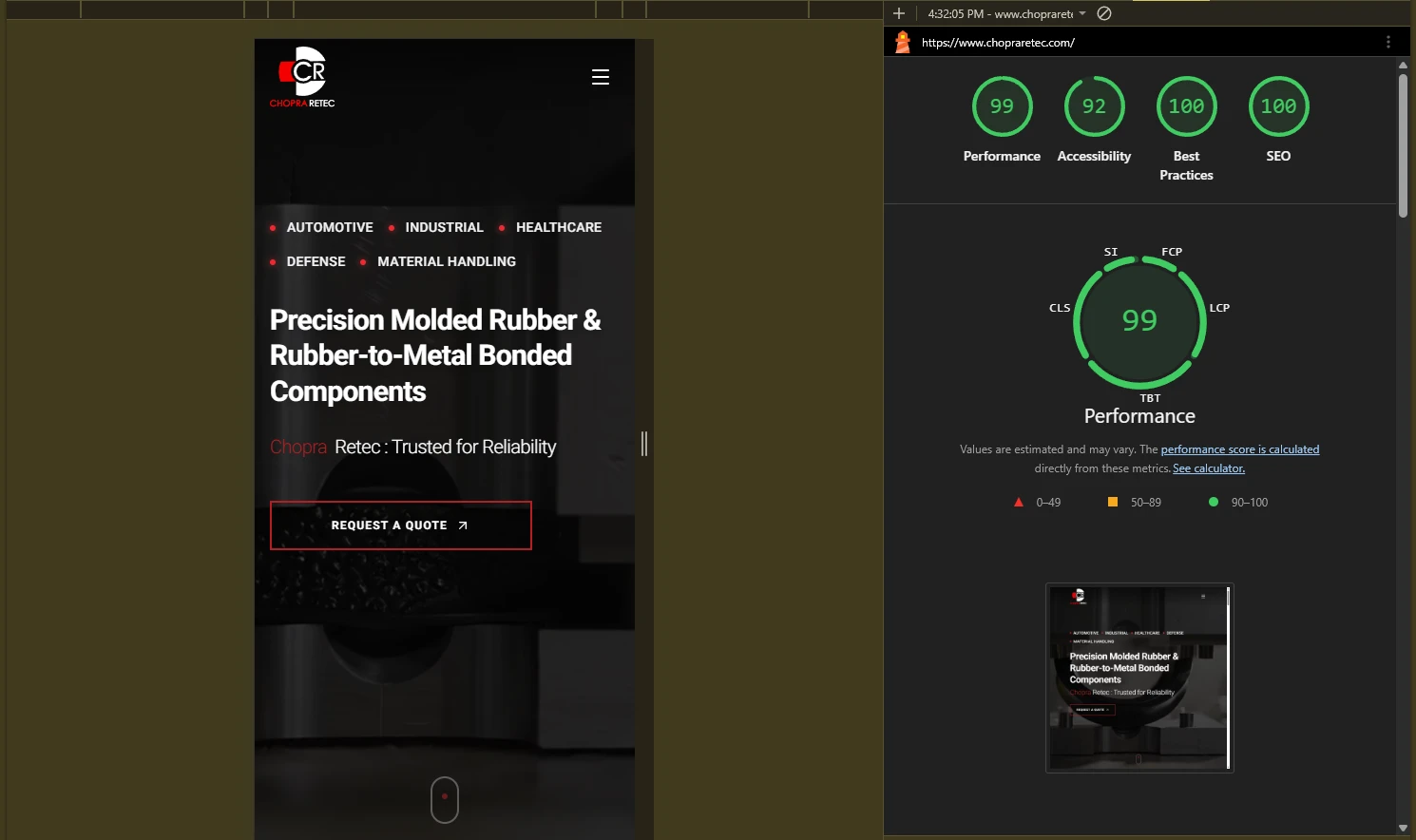
- 95+ PageSpeed Scores Out of the Box: Automatic image optimization, smart route pre-fetching, and CSS minification ensure your site achieves perfect Core Web Vitals scores.
Real-World Impact on Conversion Rates
When your website loads in under 800 milliseconds:
- Lower Ad Cost per Lead: Google Ads rewards high-speed landing pages with higher Quality Scores, directly lowering your Cost Per Click (CPC).
- Higher Organic Rankings: Google's ranking algorithms prioritize sub-second Core Web Vitals.
- Instant Client Trust: 94% of first impressions are design and speed related. A lightning-fast site signals technical authority.
Which Stack is Right for You?
- Choose WordPress if: You run a low-budget blog where speed is secondary and you require daily non-technical drag-and-drop page editing.
- Choose Next.js if: You are a growing business, SaaS provider, or enterprise brand where page speed, search engine ranking, and high lead conversions directly drive your revenue.
Get a Free Speed & Conversion Audit
Want to see how your current website performs against modern Next.js benchmarks? Request a free, no-obligation audit from our team at Kinstel Website Audit, or explore our bespoke Global Web Packages.